Connect your stack
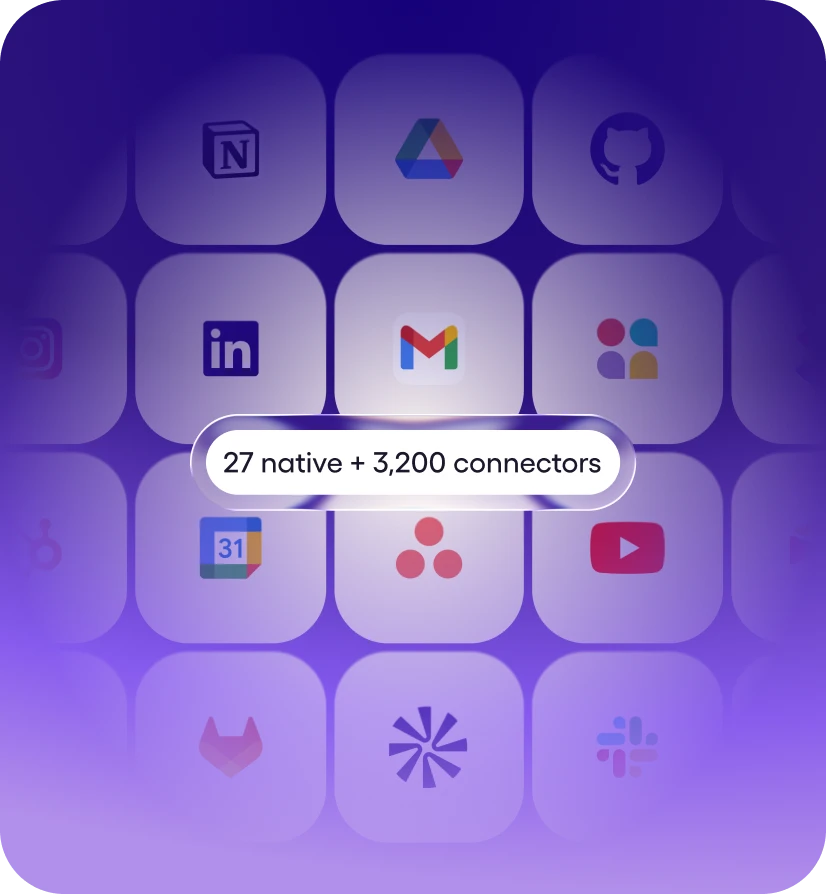
27 native integrations. 3,200+ tools via managed connectors. Most are one-click OAuth, some use API keys - Viktor handles auth and starts working. No webhooks, no Zapier zaps.

Viktor is an AI employee that connects to YouTube in one click via OAuth and helps you publish videos or podcast episodes and track how they perform, running 51 YouTube actions for you like Rate Video, Delete Video, and Update video. Ask in plain English in Slack or Microsoft Teams; Viktor does the work in YouTube and reports back. Setup takes about two minutes.
Free to start · No credit card · SOC 2 Type 1 · Works in Slack & Microsoft Teams
Messages you'd actually send. Paste one into Slack or Microsoft Teams, swap in your specifics, and Viktor takes it from there.
“Upload this video to YouTube and fill in the title and description from this outline.”
— you, in Slack or Teams
“Pull this month's viewing stats from YouTube and summarize what performed best.”
— you, in Slack or Teams
“Watch YouTube for new comments on our latest episode and draft replies for me.”
— you, in Slack or Teams
“Post a recap of our YouTube publishing schedule to this channel every Monday.”
— you, in Slack or Teams
Ask in plain English in Slack or Microsoft Teams. Viktor picks the right YouTube actions, runs the work, and reports back. No workflows to build.
Tool to add a video to a playlist by inserting a playlist item. Use when organizing videos into playlists or building curated collections.
Tool to create a new channel section for the authenticated user's YouTube channel. Use when organizing channel content into sections like featured playlists, recent uploads, or featured channels.
Tool to create a reply to an existing YouTube comment. Use when responding to user comments or engaging in conversations on videos.
Tool to create a new YouTube playlist on the authenticated user's channel. Use when organizing videos into collections or building curated playlists.
Tool to delete a YouTube channel section. Use when you need to remove a channel section from a channel. The channel section must exist and the authenticated user must have permission to delete it.
Tool to delete a YouTube comment owned by the authenticated user or channel. Use when you need to remove a comment from a video. The comment must exist and be owned by the authenticated channel.
Tool to delete a YouTube playlist owned by the authenticated user/channel. Use when you need to permanently remove a playlist from YouTube. Requires explicit confirmation via confirmDelete: true to prevent accidental deletions.
Tool to delete a playlist item (remove a video from a playlist). Use when removing specific videos from playlists.
Tool to delete a YouTube video owned by the authenticated user/channel. Use when you need to permanently remove a video from YouTube. Requires explicit confirmation via confirmDelete: true to prevent accidental deletions. The video must exist and be owned by the authenticated channel.
Gets recent activities from a YouTube channel including video uploads, playlist additions, likes, and other channel events.
Retrieves the YouTube Channel ID for a specific YouTube channel handle.
Gets detailed statistics for YouTube channels including subscriber counts, view counts, and video counts. Channels can be identified using their ID, handle (e.g., @Google), or username.
Retrieves multiple YouTube video resource parts in a single batch call. Use when you need cohort-level metrics for many videos to reduce quota usage and latency.
Retrieves the ratings that the authorized user gave to a list of specified videos. Use when you need to check if a user has liked or disliked specific videos.
Retrieves a list of caption tracks for a YouTube video. Returns an empty items list if no captions are available. Raises ExecutionFailed if the video ID is invalid or not found.
Lists YouTube channels by ID, handle, username, or ownership status, returning detailed channel information including metadata, statistics, and content details. Use this action when you need to retrieve comprehensive channel information by channel ID, handle (e.g., @username), or to list channels owned by or managed by the authenticated user. For finding channels by search query, use the search action instead.
Tool to retrieve channel sections from YouTube. Use when you need to get the layout sections of a channel's homepage. Channel sections organize content into categories like playlists, uploads, or featured channels.
Lists videos from a specified YouTube channel. This action primarily uses the playlistItems.list endpoint with the channel's uploads playlist, which is the recommended approach by YouTube. The uploads playlist ID is obtained by fetching the channel resource via the Channels API and extracting the playlist ID from contentDetails.relatedPlaylists.uploads field. If the uploads playlist returns a 404 error (which can happen due to a known YouTube API bug where the returned playlist ID doesn't actually exist), the action automatically falls back to the search.list endpoint to retrieve channel videos. Note that the search fallback has higher quota cost (100 units vs 1 unit) and is limited to 500 results. If a channel exists but has no uploads playlist (e.g., brand accounts, channels with all videos deleted, or channels that haven't uploaded any public content), an empty result set is returned instead of an error.
List individual comments from YouTube videos. Returns comment details including author, text, timestamps, and engagement metrics. Use 'id' parameter to retrieve specific comments or 'parentId' to retrieve all replies to a top-level comment.
DEPRECATED: Use YOUTUBELISTCOMMENTTHREADS2 instead. List comment threads from YouTube videos or channels for qualitative analysis and reporting. Returns top-level comments with optional replies (up to 5 per thread). Use the 'videoId' parameter to retrieve comments on a specific video (most common use case).
Tool to retrieve comment threads from YouTube videos or channels matching API request parameters. Use when you need to fetch comments with filtering by video, channel, or specific thread IDs.
Returns a list of application languages that the YouTube website supports. Use this when you need to retrieve all available language options for YouTube's interface or to localize content.
Tool to retrieve a list of content regions that the YouTube website supports. Returns region codes (ISO 3166-1 alpha-2) and localized region names. Use when you need to identify available geographic regions for content filtering or display.
Tool to list live chat messages for a specific chat. Use for monitoring live chat during broadcasts or retrieving chat history. Returns messages with author details, timestamps, and message types (text, Super Chat, moderation events).
DEPRECATED: Use YOUTUBEUPDATEVIDEO instead. Tool to list the current most-popular (charts/trending) YouTube videos for a region and/or category via videos.list(chart=mostPopular). Use when you need to retrieve YouTube's official trending or most popular videos, not keyword-search approximations.
Tool to retrieve playlist images associated with a specific playlist. Use when fetching custom thumbnail images for playlists.
Tool to list videos in a playlist, with pagination support. Use when walking through a channel's uploads playlist to enumerate all videos.
Lists Super Chat events for a channel, showing supporter purchases during live streams. Returns Super Chat and Super Sticker events from the past 30 days. Use to track and acknowledge supporter contributions.
Retrieves playlists owned by the authenticated user, implicitly using mine=True.
Retrieves the authenticated user's YouTube channel subscriptions, allowing specification of response parts and pagination.
Tool to retrieve a list of abuse report reasons that can be used to report abusive videos on YouTube. Use when you need to display available reporting categories or before calling videos.reportAbuse. Returns localized reason labels and optional secondary categorizations.
Tool to list YouTube video categories that can be associated with videos. Use when you need to retrieve available video categories for a specific region or get details about specific category IDs.
Downloads a specific YouTube caption track, which must be owned by the authenticated user, and returns its content as text. Note: This action requires you to own the video (YouTube Data API v3 restriction). Non-owned videos will return 403 Forbidden errors, including many auto-generated caption tracks.
Tool to mark one or more YouTube comments as spam. Use when moderating comments to flag spam content. Note: This endpoint is deprecated but still functional according to YouTube API documentation.
Uploads a video to YouTube using multipart upload in a single request. Use when you want to upload both metadata and video file together. This action uploads the video file and metadata in one request, unlike resumable upload which requires two steps.
Tool to post a new top-level comment on a YouTube video. Use when creating comments to engage with video content or respond to user requests.
Tool to add a like or dislike rating to a YouTube video, or remove an existing rating. Use when you need to rate videos on behalf of the authenticated user.
Tool to report a YouTube video for containing abusive content. Use when you need to flag videos that violate YouTube's community guidelines or contain harmful content.
Searches YouTube for videos, channels, or playlists using a query term, returning the raw API response.
Tool to set the moderation status of one or more YouTube comments. Use when moderating comments to hold for review, publish, or reject them. Optionally ban the comment author when rejecting.
Subscribes the authenticated user to a specified YouTube channel, identified by its unique channelId which must be valid and existing.
Tool to unsubscribe the authenticated user from a YouTube channel by deleting a subscription. Use when you need to remove an existing subscription. The subscription ID can be obtained from the YOUTUBELISTUSERSUBSCRIPTIONS tool.
Updates a YouTube caption track's metadata such as name, language, or draft status. Use this to modify existing caption track properties without uploading new caption content. Note: Only properties specified in the snippet will be updated; unspecified properties retain their current values.
Updates a channel's metadata including branding settings and localizations. Only brandingSettings, invideoPromotion, and localizations properties can be updated. Requires the channel to be owned by the authenticated user.
Tool to update an existing YouTube channel section by ID. Use when modifying section properties like title, position, or featured content.
Tool to modify the text of an existing YouTube comment. Use when updating or correcting a previously posted comment.
Tool to modify an existing YouTube playlist's metadata (title, description, privacy status). Use when updating playlist information for the authenticated user's channel.
Tool to modify a playlist item's properties such as position or note. Use when reordering videos in a playlist or updating item metadata.
Sets the custom thumbnail for a YouTube video using an image from a URL. Requirements: - The authenticated user must own the video or have permission to edit it - The YouTube channel must be verified (phone verification required) to upload custom thumbnails - Image must be JPG, PNG, or GIF; under 2MB; recommended 1280x720 resolution (16:9 aspect ratio).
Updates metadata for a YouTube video identified by videoId, which must exist; an empty list for tags removes all existing tags.
Uploads a video file to a YouTube channel; the video file must be in a YouTube-supported format.

27 native integrations. 3,200+ tools via managed connectors. Most are one-click OAuth, some use API keys - Viktor handles auth and starts working. No webhooks, no Zapier zaps.

Message Viktor in Slack like you'd message a teammate. "Upload this video to YouTube and fill in the title and description from this outline." "Pull this month's viewing stats from YouTube and summarize what performed best." Plain English, any tool.
Viktor opens YouTube, runs the work, and posts back what changed. Sensitive actions wait for your approval. Everything is logged. You stop doing the work and start reviewing it.
A YouTube AI agent is an AI that connects to your YouTube account and completes work in it - it doesn't just answer questions about YouTube, it takes the actions. Viktor is that agent: an AI employee that works in YouTube on your behalf and delivers the finished result in Slack or Microsoft Teams.
Unlike workflow builders such as Zapier or Make, there is nothing to configure - no triggers to map, no workflows to maintain. You describe the outcome in plain English, and Viktor picks the right YouTube actions, chains them with the other 3,200+ tools it connects to, and asks for approval before anything sensitive runs.
YouTube is a video-sharing platform with user-generated content, live streaming, and monetization opportunities, widely used for marketing, education, and entertainment

One-click OAuth - Viktor never sees your password, and you can revoke access at any time.
Review-first approvals: sensitive YouTube actions wait for your sign-off before they run.
Isolated compute per team, encrypted in transit and at rest - and your data is never used to train models.
SOC 2 Type 1 compliant, with Type 2 and ISO 27001 in progress.
Yes. YouTube is one of the 3,200+ tools Viktor connects to, via a managed connector. Once connected, anyone on your team can put Viktor to work in YouTube from Slack or Microsoft Teams - no workflow builder, no code.