Step 1: Connect your stack
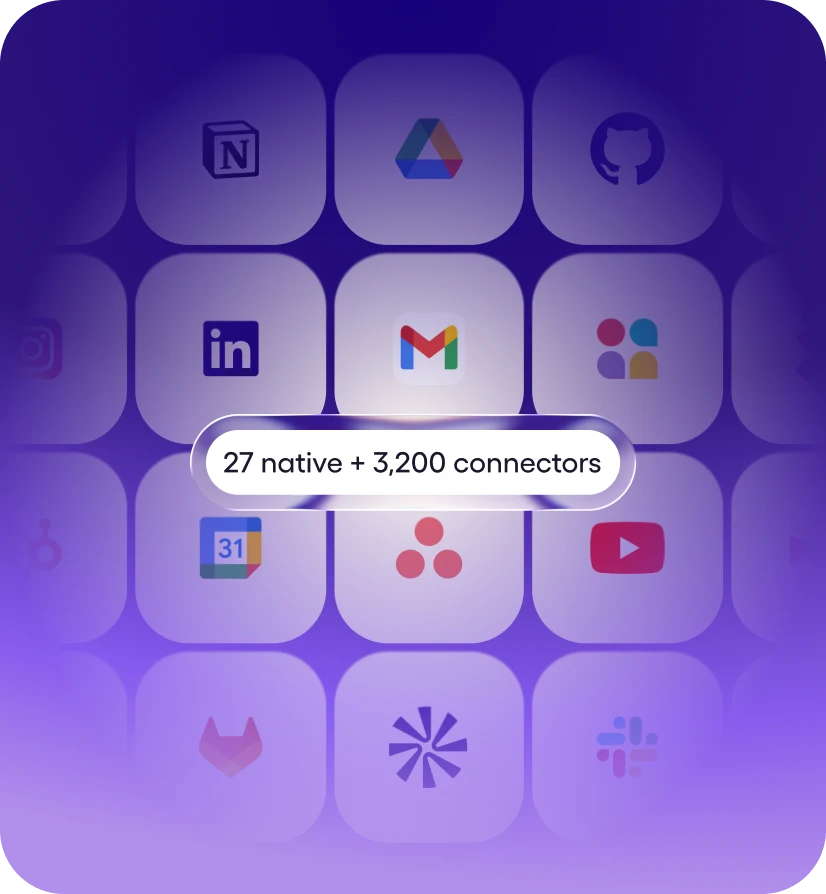
27 native integrations. 3,200+ tools via managed connectors. Most are one-click OAuth, some use API keys - Viktor handles auth and starts working. No webhooks, no Zapier zaps.


Viktor is an AI employee that connects to Jira & Confluence and helps you plan, assign, and track project tasks, running 41 Jira & Confluence actions for you like Fetch, Search, and Jira read. Ask in plain English from your workspace; Viktor does the work in Jira & Confluence and reports back. Viktor connects natively.
A Jira & Confluence AI agent is an AI that connects to your Jira & Confluence account and completes work in it - it doesn't just answer questions about Jira & Confluence, it takes the actions. Viktor is an AI employee that works in Jira & Confluence on your behalf and delivers the finished result to your workspace.
Unlike workflow builders such as Zapier or Make, there is nothing to configure - no triggers to map, no workflows to maintain. You describe the outcome in plain English, and Viktor picks the right Jira & Confluence actions, chains them with the other 3,200+ tools it connects to, and asks for approval before anything sensitive runs.
About Jira & Confluence
Manage issues, projects, and collaborate on documentation

You ask in your workspace
Describe what you need in plain English

Viktor picks the actions
Selects from 41 Jira & Confluence actions, chains them together

Runs in Jira & Confluence
Helps you plan, assign, and track project tasks - your real data.
Reports back
Delivers the finished result to your workspace
Messages you'd actually send. Paste one into your workspace, swap in your specifics, and Viktor takes it from there.
“Create tasks in Jira & Confluence from the action items in this thread.”
— you, to @Viktor
“Summarize what changed in Jira & Confluence this week and post it here every Friday.”
— you, to @Viktor
“Find the tasks in Jira & Confluence that are overdue and draft a status update.”
— you, to @Viktor
“Keep Jira & Confluence in sync with our roadmap and flag anything at risk.”
— you, to @Viktor
27 native integrations. 3,200+ tools via managed connectors. Most are one-click OAuth, some use API keys - Viktor handles auth and starts working. No webhooks, no Zapier zaps.
Message Viktor in Slack like you'd message a teammate. "Reconcile this month's invoices and flag anything weird." "Pause Meta campaigns above $40 CPA and move the budget to winners." Plain English, any tool.
Viktor opens the tools, runs the work, and posts back what changed. Sensitive actions wait for your approval. Everything is logged. You stop doing the work and start reviewing it.
Ask in plain English from your workspace. Viktor picks the right Jira & Confluence actions, runs the work, and reports back. No workflows to build.
Get child pages of specified page.
Jira read operations (e.g. get issue link types).
Get current user info.
Get cloudId to make tool calls. When a link is provided (e.g. try passing the site hostname (e.g. site.atlassian.net) as cloudId to other tools first; if that fails, use this tool to list accessible resources.
Get issue types.
Get remote links.
Get projects.
Get transitions.
Transition issue status.
Ask for outcomes that span tools - Viktor pulls from Jira & Confluence, cross-references the rest of your stack, and delivers one finished result.
Viktor connects to 3,200+ tools and works across them in a single run.
Yes. Jira & Confluence is one of the 3,200+ tools Viktor connects to, as one of Viktor's native, deepest integrations. Once connected, anyone on your team can put Viktor to work in Jira & Confluence from their workspace - no workflow builder, no code.
One hire. The output of a team.
Viktor works nights, remembers every decision, and connects to 3,200 tools. Start free with $100 in credits, then $50 a month.