

Three red alerts in one minute
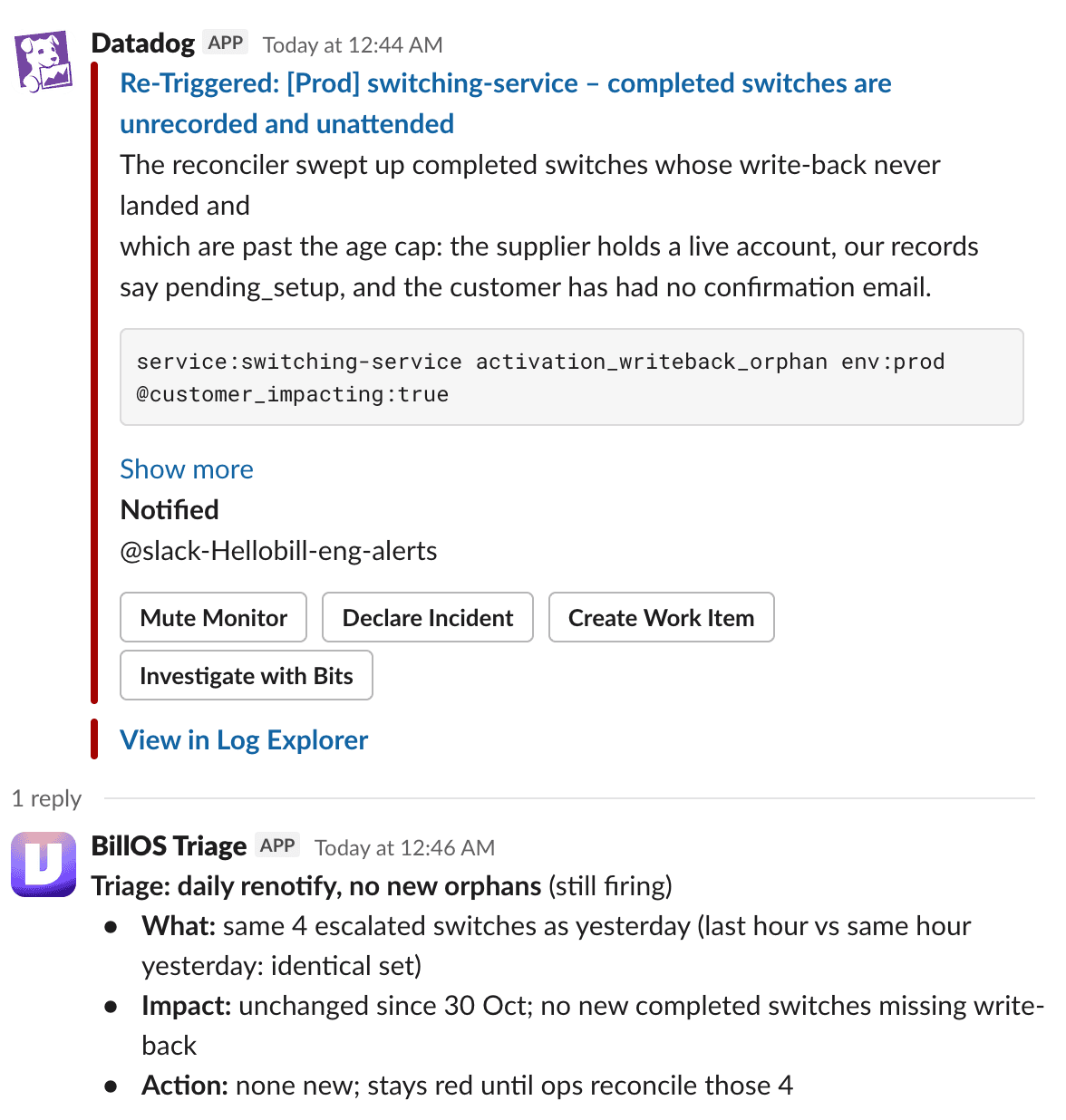
On Viktor's first day triaging alerts at helloBill, a production deploy set off three red alerts within a minute, one for the customer API and two for the partner API. Viktor pulled the deploy run and the replica counts. The rollout had briefly taken the customer API to zero healthy pods, so callers got 503s and the partner API returned 502s, and both recovered in about a minute. Viktor replied in each alert's thread with the verdict, the evidence and the impact, tied all three to one root cause and noted that no code fix was needed. Before, a check like that waited on someone remembering to do it.
Before Viktor
Simon Chapman is CTO of helloBill, a seed-stage UK AI platform that takes life admin off people's hands. The team wanted to stay small and AI-native, but keeping the operating rhythm going pointed to "lots and lots of people." Hiring them, Simon says, "would have cost us an urgent series A."
Without a person driving it, the daily work depended on someone remembering: chasing roadmap owners, pulling scattered reports together, looking into each production alert. The team had tried Claude and other AI tools, and had considered building its own agentic harness for every employee.
What changed
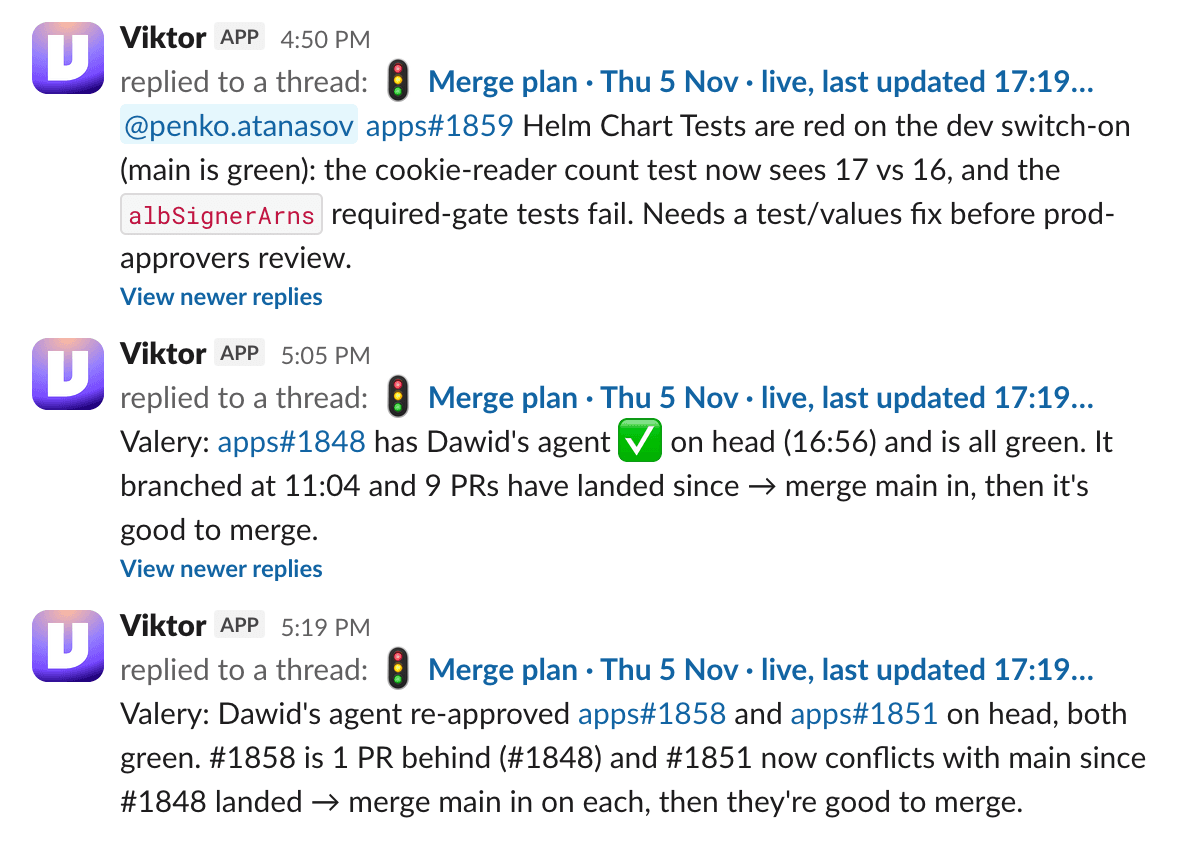
helloBill's team are "avid slack users first and foremost," so trying Viktor was "an easy lift." What surprised Simon most was how fast and easy the setup was. helloBill brought Viktor on in May 2026 as its AI operations coordinator across product, engineering, finance and growth. People ask it for things in Slack channels or by DM, and standing jobs run on a schedule or when an event like a new alert comes in.
Each weekday Viktor chases roadmap owners in Notion around the 09:30 standup. At 09:45 it posts one headline chart against targets, built from Power BI, Mixpanel, Google Analytics and Intercom.
Alert triage is where the work pays off. When a red alert lands, Viktor checks the monitor, recent deploys, error logs and replica counts. It decides whether the alert is a deploy blip, a supplier outage, known noise or a real bug, and posts a short verdict in the thread. A real bug goes to a coding agent, which raises a pull request for review.
Viktor also coaches the phone sales desk with daily call plans, runs paid social campaigns and builds internal tools, such as a self-serve reports builder that replaces the team's old BI dashboards.
From there, it all became simple. Not weird configurations, no how we get the data in, no worrying about connectors to other tools and data sources. Viktor just works.
Results
helloBill puts the saving at about USD 130000 a month in people it didn't have to hire, and it got there without the urgent Series A that hiring would have forced. Work that used to depend on someone remembering now runs every day, around the clock, without a person driving it. Every red production alert gets a triage, and one daily report against targets has replaced the scattered reports the team used to piece together.
A few clicks, and you will be setup, and already having Viktor delivering like he's been a piece of old furniture in the business.
Staying in control
Paid ads stay paused until an executive approves a launch or a budget, and on the Notion roadmap Viktor changes status or assignee only when the owner says so. Every code change goes through pull-request review by Simon's AI agent before a person ships it. Viktor never looks at customer personal data, and leadership-only material stays in its private channel.
What's next
Next, Simon wants Viktor to take on more across reporting, growth, engineering, finance and go-to-market.